


















1. The Borderline Left Heart: Definition and Contemporary Clinical Spectrum
The term borderline left heart does not describe one specific congenital cardiac lesion. Rather, it identifies a heterogeneous group of patients in whom the left ventricle and associated left-sided structures are underdeveloped, but where it remains uncertain whether the left ventricle can ultimately support the systemic circulation adequately. This uncertainty distinguishes borderline left-heart disease from classical hypoplastic left heart syndrome with unequivocally inadequate left-sided structures and from mild left-sided obstruction in which biventricular repair is clearly appropriate. Contemporary literature emphasizes that the definition remains inconsistent between institutions and studies, which complicates direct comparison of outcomes.
The spectrum may include critical aortic stenosis with varying degrees of left ventricular hypoplasia, mitral stenosis, mitral hypoplasia, Shone complex, coarctation associated with a small left ventricle, hypoplastic left heart complex, aortic arch obstruction, endocardial fibroelastosis, and combinations of these lesions. The same measured ventricular dimension can have dramatically different clinical implications depending on valve morphology, ventricular geometry, myocardial compliance, coronary anatomy, arch obstruction, pulmonary venous pressure, and the presence or absence of endocardial fibroelastosis.
This heterogeneity creates a fundamental problem: a small ventricle is not necessarily a nonfunctional ventricle. A ventricle that is small at birth may possess substantial growth potential if obstruction is relieved and appropriate preload and afterload are established. Conversely, a ventricle with apparently acceptable dimensions may fail after biventricular repair if its myocardium is intrinsically abnormal, if EFE is extensive, or if residual mitral or aortic obstruction persists.
The modern concept therefore moves away from asking, “Is the LV big enough?” and toward asking, “Does this LV have sufficient structure, flow, compliance, and growth potential to become an effective systemic ventricle?”
This distinction is clinically important because the consequences of the initial decision are profound. Single-ventricle palliation commits the child to a lifelong Fontan-type circulation, whereas biventricular repair seeks to establish a more conventional two-ventricle circulation but may expose the child to recurrent left-sided obstruction, diastolic dysfunction, pulmonary hypertension, and repeated interventions.
The emergence of hybrid palliation and staged ventricular recruitment has further altered the decision landscape. Rather than forcing a definitive neonatal decision, selected patients can undergo an initial strategy that preserves systemic output while allowing the left heart to demonstrate its biological growth potential. Hybrid palliation can therefore function as a “bridge-to-decision,” while staged recruitment actively attempts to transform a borderline ventricle into a functional systemic ventricle.
The borderline left heart should consequently be conceptualized as a dynamic phenotype. Its anatomy at birth is only the starting point. Serial ventricular growth, changes in valve dimensions, flow distribution, ventricular compliance, pulmonary vascular resistance, and clinical response can progressively alter the optimal therapeutic pathway.
2. Anatomical Substrates and Pathophysiological Mechanisms
Borderline left-heart physiology generally results from abnormalities affecting one or more components of the left-sided circulation: the mitral valve, left ventricle, aortic valve, left ventricular outflow tract, ascending aorta, transverse arch, or descending aorta. These structures function as an integrated hydraulic system, meaning that disease at one level can influence development and function at another.
The mitral valve is particularly important because it determines LV preload. Severe mitral stenosis, hypoplasia, or atresia reduces ventricular filling and contributes to underdevelopment. Similarly, aortic stenosis or atresia reduces antegrade flow from the LV into the ascending aorta and may influence both LV and aortic development. In some patients, the primary problem is not ventricular myocardial hypoplasia but chronic reduction of flow through the left heart.
This has important implications for ventricular recruitment. If reduced flow contributes to hypoplasia, increasing effective flow through the left heart after relief of obstruction may stimulate growth. This concept underlies many contemporary recruitment strategies. However, the relationship is not unlimited. A ventricle affected by extensive myocardial fibrosis or EFE may have poor growth and poor diastolic compliance despite technically adequate restoration of flow.
Endocardial fibroelastosis represents one of the most important pathological modifiers. It produces a thickened, relatively noncompliant endocardial layer and can impair both systolic and diastolic function. Therefore, ventricular dimensions alone can overestimate the ability of the LV to function as a systemic ventricle.
The aortic arch represents another critical component. Coarctation or arch hypoplasia increases LV afterload and can contribute to a cycle of reduced forward flow, ventricular underdevelopment, and myocardial dysfunction. Conversely, successful arch reconstruction may substantially improve the loading conditions required for ventricular rehabilitation.
Coronary anatomy also matters. In severe aortic stenosis or HLHS variants, coronary perfusion may depend on retrograde flow through the ductus and arch. A patient may therefore have apparently recruitable LV anatomy but unfavorable coronary physiology.
The pathological process is also influenced by fetal hemodynamics. The fetal circulation normally directs only a portion of combined cardiac output through the lungs, while the placenta provides low-resistance systemic circulation. Abnormalities that reduce left-sided output can therefore become partially compensated by right-sided flow. Once the ductus closes after birth, however, systemic circulation becomes dependent on adequate LV output in patients selected for biventricular physiology.
The pathophysiology is therefore multidimensional. The question is not simply whether the LV is small. It is whether the ventricle has adequate preload capacity, contractile reserve, compliance, coronary perfusion, inflow, outflow, and systemic arterial connectivity.
This explains why two neonates with identical LV end-diastolic dimensions may have very different outcomes after biventricular repair.
Contemporary management therefore emphasizes integrated anatomy rather than isolated measurements. Reviews have repeatedly highlighted the heterogeneity of the borderline LV population and the absence of a universally reliable definition or prediction model.
3. Why Borderline Left Heart Represents a Surgical Decision-Making Problem
The central difficulty is that congenital cardiac surgeons must make a decision at a moment when the biological potential of the left ventricle is incompletely known. Neonatal imaging provides anatomical information, but it cannot perfectly predict how the LV will respond to altered loading conditions after surgery.
The traditional approach divided patients into two groups. Those with an adequate LV underwent biventricular repair, whereas those with severe hypoplasia underwent Norwood-type single-ventricle palliation. The borderline population occupied the middle ground. Historically, because failure of a biventricular repair could be catastrophic, many borderline patients were directed toward the single-ventricle pathway.
The problem is that Fontan physiology is not equivalent to normal circulation. Although contemporary Fontan survival has improved considerably, the physiology remains associated with elevated systemic venous pressure, limited preload, abnormal lymphatic function, hepatic congestion, exercise intolerance, arrhythmia, protein-losing enteropathy, plastic bronchitis, thromboembolism, and eventual ventricular or circulatory failure.
Consequently, a strategy that avoids unnecessary single-ventricle palliation has strong theoretical appeal. However, the opposite error is equally important. Aggressively pursuing biventricular repair in a ventricle that cannot sustain systemic work may result in persistent high left atrial pressure, pulmonary hypertension, ventricular failure, repeated surgery, transplantation, or late conversion to Fontan circulation.
The modern challenge is therefore not simply to maximize the percentage of patients receiving biventricular repair. The real goal is to identify patients in whom biventricular repair provides a durable physiological advantage.
This distinction is supported by contemporary outcome studies. In one recent multicenter study of neonatal primary biventricular repair, adverse outcomes were associated with smaller mitral valve dimensions and the presence of EFE. Another study found aortic valve Z-score below −2 and EFE to be important predictors of adverse outcomes after primary biventricular repair.
Therefore, the concept of “technical success” is insufficient. A technically successful biventricular repair may still be physiologically unsuccessful if the patient develops high filling pressures, pulmonary hypertension, severe diastolic dysfunction, or progressive LV failure.
A contemporary decision must therefore incorporate at least five domains:
- Anatomical adequacy
- Myocardial quality
- Hemodynamic performance
- Growth potential
- Expected long-term physiological durability
This has encouraged institutions to use staged and hybrid strategies for selected borderline patients.
The major conceptual shift is therefore from a binary “BiV versus Fontan” decision to a longitudinal strategy in which anatomy, physiology, growth, and treatment response are reassessed repeatedly.
4. Preoperative Echocardiographic Assessment and Morphometric Evaluation
Echocardiography remains the principal first-line imaging modality for evaluating borderline left-heart anatomy. Its major advantages are portability, availability, absence of ionizing radiation, high temporal resolution, and the ability to assess anatomy and physiology repeatedly during the neonatal and interstage periods.
The assessment should extend well beyond measurement of LV diameter. Important parameters include LV end-diastolic dimension, LV length, LV volume when feasible, mitral valve diameter and area, aortic valve diameter, aortic annulus, ascending aorta, LVOT dimensions, arch dimensions, ventricular geometry, ventricular systolic function, diastolic filling, mitral inflow, aortic flow, and evidence of EFE.
Z-scores are commonly used to normalize measurements for body size. However, Z-scores are not universally interchangeable between laboratories because reference populations and calculation methods differ. Consequently, a Z-score should never be interpreted as an absolute biological threshold.
A particularly important issue is that two-dimensional echocardiography can underestimate ventricular volume. In borderline ventricles, this may produce an excessively pessimistic assessment. Cardiac magnetic resonance studies have demonstrated clinically relevant discrepancies between echocardiographic and CMR-derived LV volumes.
Mitral valve dimensions are especially valuable because they provide information about the ability of the LV to receive systemic venous return after biventricular repair. Recent neonatal data demonstrate that small mitral valve dimensions are associated with increased risk of adverse outcome and later left-heart reintervention.
The aortic valve should also be examined carefully. Severe hypoplasia may indicate inadequate LV output capacity, particularly when associated with EFE and significant mitral pathology. Aortic valve Z-score below −2 has been associated with adverse outcomes in neonatal biventricular repair cohorts.
The arch must be assessed because coarctation can both affect ventricular loading and modify outcomes. A repaired arch may create a substantially more favorable systemic afterload environment.
The echocardiographic examination should also evaluate the atrial septum. A restrictive atrial septum can raise left atrial pressure and pulmonary venous pressure, while excessive atrial communication can reduce LV preload. Thus, atrial septal physiology can be an intentional component of ventricular recruitment.
Importantly, echocardiography should be repeated over time. A single neonatal study represents a snapshot. Serial measurements can demonstrate whether the LV is growing, whether mitral and aortic structures are enlarging, and whether ventricular function improves following intervention.
Therefore, echocardiography should be considered not merely a diagnostic examination but a dynamic monitoring system for ventricular rehabilitation.
5. Cardiac Magnetic Resonance and Flow-Based Assessment
Cardiac magnetic resonance has become increasingly important in borderline LV evaluation because it provides accurate volumetric assessment and can quantify blood flow through the ascending aorta and other vascular structures.
LV end-diastolic volume indexed to body surface area is particularly relevant. Unlike linear echocardiographic measurements, CMR-derived volumes account for the three-dimensional geometry of the ventricle. This is especially valuable in ventricles that are small, elongated, non-apex-forming, or distorted by congenital anatomy.
CMR can also quantify ascending aortic flow. This is clinically important because the amount of forward flow generated by the LV may provide a functional indicator of its systemic contribution. In a JACC: Advances study, ascending aortic flow, EFE, and mitral valve Z-score were among the important variables associated with treatment assignment.
The same study found that intended biventricular patients had substantially greater ascending aortic flow than those ultimately managed with single-ventricle strategies. More importantly, transplantation-free biventricular survival was approximately 96% at one year, 82% at five years, and 77% at ten years in the analyzed biventricular cohort.
CMR can additionally assess myocardial fibrosis and tissue characteristics. While neonatal implementation may be technically demanding, tissue characterization has the potential to improve identification of ventricles that are structurally abnormal despite apparently favorable dimensions.
CMR is also useful after recruitment. A ventricle that reaches an apparently acceptable size may still have abnormal geometry or reduced functional reserve. CMR can therefore provide an objective assessment before definitive biventricular conversion.
One major advantage of CMR is that it can expose the limitations of relying on historical volume thresholds. Earlier approaches sometimes considered indexed LV volume thresholds such as approximately 20 mL/m², but subsequent studies have demonstrated that volume alone is insufficient.
Recent work in patients without major aortic or mitral stenosis has proposed CMR-derived LVEDVi and ascending aortic flow as potentially useful discriminators. One study identified an LVEDVi threshold around 27 mL/m² as an important discriminatory parameter, while also demonstrating that successful primary and staged biventricular repair could achieve favorable mid- and long-term functional outcomes in selected patients.
Nevertheless, CMR should not replace clinical judgment. It is one component of a multimodality evaluation.
The future likely lies in combining CMR-derived volume, flow, tissue characterization, echocardiographic valve measurements, ventricular pressure data, and longitudinal growth rather than relying on a single cutoff.
6. Predictive Scoring Systems and Their Contemporary Limitations
Several scoring systems have historically been developed to estimate whether a borderline LV could support biventricular circulation. These include the Rhodes score, the Congenital Heart Surgeons Society-related approaches, and other discriminant models.
The attraction of scoring systems is obvious. They convert complex anatomy into measurable variables and can potentially standardize decision-making. However, their limitations have become increasingly apparent.
The first limitation is population specificity. A score derived from patients with critical aortic stenosis may not perform identically in patients with Shone complex, mitral stenosis, coarctation, or HLH complex.
The second limitation is that many scoring systems rely heavily on anatomical measurements obtained before the full biological behavior of the ventricle is known. They therefore cannot completely capture growth potential.
The third limitation is the failure to adequately incorporate myocardial quality. EFE, fibrosis, and diastolic dysfunction can substantially influence outcome without necessarily causing dramatic changes in ventricular dimensions.
The fourth limitation is technological. Modern CMR can provide more accurate volumetric and flow information than was available when many classical scoring systems were developed.
The fifth limitation is therapeutic evolution. Hybrid palliation and staged recruitment have created a new clinical pathway in which the original neonatal anatomy does not necessarily determine the final circulation.
Contemporary reviews therefore emphasize that no single validated score has achieved universal acceptance.
This does not mean scores are useless. On the contrary, they can be valuable as structured decision-support tools. Their greatest utility may be to identify patients at clearly high or low risk, while intermediate cases are directed toward individualized assessment or a bridge-to-decision strategy.
A contemporary scoring system should ideally integrate:
- mitral valve size;
- aortic valve size;
- LV volume;
- LV geometry;
- EFE;
- LV systolic and diastolic function;
- ascending aortic flow;
- arch anatomy;
- pulmonary venous pressure;
- atrial septal physiology;
- coronary anatomy;
- ventricular pressure relationships;
- longitudinal growth trajectory.
The recent neonatal study demonstrating that mitral valve dimensions and EFE independently predict adverse outcomes illustrates why newer risk models need to incorporate myocardial and valve characteristics rather than relying exclusively on ventricular size.
Thus, the appropriate role of a score is not to replace expert decision-making but to discipline it.
The strongest contemporary model may ultimately be a dynamic score that is updated after each intervention according to the observed response of the LV.
7. The Role of Endocardial Fibroelastosis in Patient Selection
Endocardial fibroelastosis is one of the most important determinants of whether a borderline LV can successfully become a systemic ventricle.
EFE involves abnormal deposition of collagen and elastic tissue within the endocardium. This produces increased myocardial stiffness and impaired ventricular relaxation. The result may be a ventricle that appears adequate in size but cannot accommodate sufficient preload without markedly elevated filling pressure.
This distinction is critical. Biventricular circulation requires the LV to accept pulmonary venous return at relatively low filling pressures. If the ventricle becomes severely noncompliant, pulmonary venous hypertension can develop even when systolic function appears preserved.
EFE has therefore emerged as an important adverse prognostic marker. In a large neonatal primary biventricular repair cohort, EFE was independently associated with adverse outcomes and with the need for left-heart reintervention. Earlier data similarly demonstrated a strong association between EFE and adverse outcomes.
The surgical implications are substantial. EFE resection may be incorporated into ventricular recruitment procedures to improve compliance and permit the LV to respond more effectively to increased preload.
The concept is analogous to remodeling a stiff chamber before asking it to perform systemic work.
However, EFE resection is not a universally successful solution. Extensive or longstanding myocardial pathology may not be completely reversible. Furthermore, aggressive endocardial resection carries potential risks of myocardial injury, bleeding, and impaired ventricular integrity.
The timing of EFE intervention is therefore critical. Some centers incorporate EFE resection during staged recruitment rather than attempting an immediate definitive biventricular repair.
The presence of EFE should not automatically exclude biventricular repair, but it should shift the decision toward greater caution and more intensive surveillance.
A useful conceptual distinction is:
LV size = structural potential
whereas
EFE and compliance = functional reserve.
A patient may have the first without the second.
This is one reason modern patient selection has become more sophisticated than historical criteria based solely on LV volume or valve diameter.
The presence, extent, and evolution of EFE should therefore be incorporated into multidisciplinary decision-making, particularly when choosing between immediate biventricular repair and a staged recruitment pathway.
8. Mitral Valve Morphology, Inflow Adequacy, and Ventricular Recruitment
The mitral valve is the gateway through which pulmonary venous return enters the systemic ventricle. Consequently, its morphology has a direct impact on the feasibility of biventricular circulation.
A small mitral valve can limit LV filling, promote chronic underdevelopment, and increase left atrial pressure after biventricular repair. Mitral stenosis compounds this problem by imposing a fixed inflow obstruction.
Mitral valve Z-score and effective valve area are therefore important components of preoperative evaluation.
Recent data provide particularly strong support for this concept. In a large neonatal cohort undergoing primary biventricular repair, a mitral valve area Z-score below −2 was associated with increased risk of adverse outcome, while a small mitral valve anterior-posterior diameter was associated with subsequent left-heart reintervention.
However, the mitral valve cannot be assessed independently from the LV. A small valve supplying a severely hypoplastic ventricle is different from a small valve supplying a ventricle that is actively growing.
Mitral morphology also matters. Dysplastic leaflets, abnormal papillary muscles, parachute morphology, and subvalvar stenosis can make repair difficult and may lead to residual stenosis or regurgitation.
In Shone complex, multiple left-sided obstructive lesions frequently coexist. The mitral valve may therefore represent only one component of a broader inflow-outflow problem.
During ventricular recruitment, increasing flow through the mitral valve can provide a growth stimulus. However, this strategy requires the valve to tolerate increased flow without developing clinically significant stenosis.
Mitral intervention may therefore be necessary. Depending on anatomy, surgical valvotomy, valve repair, or occasionally replacement may be considered. Valve replacement in infants remains particularly challenging because of prosthesis size, anticoagulation, somatic growth, and repeated future operations.
The recruitment strategy should consequently seek to create the best possible mitral inflow while preserving native valve tissue.
Another important consideration is atrial septal physiology. A restrictive atrial septum can raise left atrial pressure but may also increase LV preload under carefully controlled circumstances. The relationship is not simply “more atrial communication is better.” Instead, the atrial septum becomes an adjustable component of ventricular loading.
The long-term goal is a mitral valve that can accommodate pulmonary venous return at acceptable pressure without severe stenosis or regurgitation.
Thus, mitral valve assessment should include size, morphology, inflow gradient, regurgitation, subvalvar anatomy, and response to increased loading.
9. Aortic Valve, Left Ventricular Outflow Tract, and Systemic Flow
The aortic valve and LVOT determine whether the recruited LV can effectively deliver systemic cardiac output. A ventricle may be structurally adequate but functionally limited if the outflow tract remains severely obstructed.
Critical aortic stenosis represents a classic example. Fetal reduction in LV output can contribute to LV hypoplasia, while the stenotic valve creates persistent afterload. Relief of obstruction may therefore serve two purposes: immediate improvement in systemic output and stimulation of subsequent ventricular growth.
However, the aortic valve may be intrinsically abnormal. Bicuspid, unicuspid, dysplastic, or severely stenotic valves may require intervention and may remain a long-term source of obstruction.
Aortic valve size has emerged as a useful prognostic marker. In neonatal biventricular repair, an aortic valve Z-score below −2 has been associated with adverse outcomes and increased need for left-heart reintervention.
The LVOT itself should also be assessed for muscular narrowing, tunnel-like obstruction, subaortic stenosis, and potential future obstruction.
The objective is not merely to create a technically open pathway. The repaired LVOT must provide sufficient forward flow without excessive gradient while preserving coronary perfusion.
The concept of ascending aortic flow is particularly valuable. CMR studies suggest that forward ascending aortic flow can provide functional information beyond static dimensions.
A patient with a small but high-flow LV may have greater biventricular potential than a patient with a similar-sized LV generating very little ascending aortic flow.
The surgical strategy may include aortic valvotomy, balloon valvuloplasty, surgical valve repair, Ross-Konno-type procedures in selected circumstances, or other LVOT interventions. The choice depends heavily on anatomy and the anticipated durability of the reconstruction.
The long-term issue is equally important. A neonatal intervention that creates adequate flow may still result in progressive aortic stenosis or regurgitation years later.
Thus, aortic valve assessment should distinguish:
- anatomical size;
- severity of stenosis;
- degree of regurgitation;
- ventricular pressure;
- forward flow;
- coronary anatomy;
- LV myocardial condition;
- anticipated reintervention burden.
The contemporary approach is therefore to regard the aortic valve and LVOT as part of the ventricular recruitment system, rather than as isolated surgical targets.
10. Aortic Arch and Coarctation: Their Influence on Biventricular Potential
The aortic arch plays a critical role in both systemic perfusion and LV afterload. In borderline left-heart disease, arch obstruction can magnify the physiological burden placed on a small ventricle.
Coarctation or transverse arch hypoplasia increases LV afterload and may reduce effective systemic flow. If the LV is already small, the additional pressure load can prevent successful remodeling.
Arch reconstruction therefore becomes more than a technically necessary procedure. It can represent an important component of ventricular rehabilitation.
Interestingly, CMR-based outcome studies have identified the relationship between coarctation repair and long-term biventricular survival. In one cohort, patients who required aortic coarctation repair had unexpectedly favorable transplant-free biventricular outcomes, while the absence of coarctation repair was associated with increased risk in the analyzed population.
This should not be interpreted to mean that coarctation is protective. Rather, it illustrates the complexity of patient selection and anatomical phenotypes. Patients with isolated or predominantly arch-related obstruction may represent a biologically different subgroup from those with severe intrinsic ventricular and valvar hypoplasia.
Arch anatomy should therefore be evaluated in relation to the entire left heart.
The surgical objective is to create a low-resistance systemic pathway with minimal residual obstruction. Even mild residual arch obstruction can produce excessive LV afterload and undermine ventricular rehabilitation.
In the neonatal setting, arch reconstruction may be performed with simultaneous biventricular repair, as part of a Norwood-type operation, or within a hybrid/recruitment pathway.
The timing depends on systemic perfusion, ductal dependence, severity of obstruction, and the overall ventricular strategy.
Another important consideration is recurrent arch obstruction. A technically satisfactory neonatal repair can later develop recoarctation or residual arch hypoplasia. Such lesions require early detection because chronic increased afterload can compromise the recruited LV.
Thus, long-term surveillance should include blood pressure assessment, Doppler arch imaging, and when indicated, cross-sectional imaging.
The arch should consequently be regarded as a determinant of LV loading conditions, not merely a separate anatomical lesion.
11. Primary Neonatal Biventricular Repair
Primary biventricular repair attempts to establish two-ventricle circulation during the initial neonatal intervention. Its principal advantage is avoiding a period of single-ventricle physiology and potentially avoiding multiple stages of palliation.
In selected patients, primary repair may provide excellent long-term functional outcomes. However, selection is critical.
Primary repair generally requires that the LV possess sufficient size, inflow, outflow, myocardial quality, and expected growth potential. Patients with severe EFE, extremely small mitral or aortic valves, severe ventricular dysfunction, or profound diastolic abnormalities may be poor candidates.
The contemporary evidence is increasingly supportive of risk-stratified primary repair rather than indiscriminate expansion of its indications.
A recent 2026 Journal of Thoracic and Cardiovascular Surgery study evaluated neonatal primary biventricular repair in 237? [the published cohort reported 237 evaluable patients in the abstracted analysis], with a composite adverse outcome of death, transplantation, conversion to single-ventricle circulation, elevated pulmonary vascular resistance, or elevated left atrial pressure. Mitral valve dimensions and EFE emerged as significant predictors.
This finding is important because it demonstrates that a successful operation cannot be defined merely by hospital survival.
The immediate postoperative period is particularly vulnerable. A small LV suddenly receives the entire pulmonary venous return and must provide systemic output. If the ventricle is unable to tolerate this loading condition, left atrial pressure may rise, pulmonary edema may develop, and pulmonary vascular resistance may increase.
The postoperative strategy therefore requires meticulous management of preload, afterload, ventilation, pulmonary vascular resistance, rhythm, and residual lesions.
Primary repair also creates the possibility of rapid ventricular remodeling because the LV is exposed to systemic loading immediately.
The fundamental advantage is therefore early physiological integration.
The fundamental disadvantage is limited opportunity to observe ventricular growth before committing to systemic LV function.
This creates the central trade-off: immediate anatomical correction versus biological uncertainty.
The modern surgical philosophy is consequently selective. A neonate with favorable anatomy and physiology may benefit from primary repair, while an intermediate patient may be better served by hybrid palliation or staged recruitment.
12. Hybrid Palliation as a Bridge-to-Decision Strategy
Hybrid palliation has become one of the most important contemporary approaches for selected borderline LV patients.
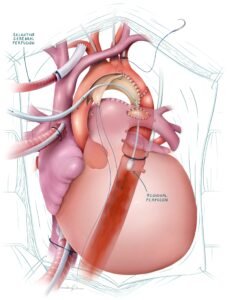
The classic hybrid procedure combines bilateral pulmonary artery banding with maintenance of ductal patency using a ductal stent or prostaglandin. In appropriate anatomy, it avoids the full physiological burden of a neonatal Norwood procedure and can postpone definitive circulatory assignment.
The conceptual advantage is simple: time becomes a diagnostic and therapeutic tool.
Instead of assuming that the neonatal LV will either grow or fail, the hybrid pathway allows clinicians to observe its response over several months.
In a study of borderline LV patients undergoing neonatal hybrid palliation, subsequent assessment allowed some patients to undergo biventricular repair while others proceeded toward single-ventricle palliation. LV mass increased substantially in patients who ultimately underwent biventricular repair.
Another series of 48 patients with hypoplastic left heart complex treated with neonatal hybrid palliation reported subsequent biventricular repair in 46 patients, with no hospital or late mortality among those who underwent BVR in that specific cohort; estimated transplant-free survival at 5, 10, and 15 years was 95.7%.
These results are encouraging but should not be generalized indiscriminately. Such outcomes may reflect highly selected anatomy, institutional expertise, and specific hybrid protocols.
Hybrid palliation has several potential physiological benefits. Pulmonary overcirculation can be controlled through pulmonary artery bands, while systemic output can remain ductal-dependent. By controlling pulmonary blood flow, the strategy may improve systemic perfusion and create an environment in which the LV can develop.
However, the strategy is not risk-free. Ductal stent complications, pulmonary artery distortion, thrombosis, reintervention, and interstage instability can occur.
The hybrid strategy therefore requires intensive surveillance and rapid access to catheterization and surgical intervention.
Its greatest conceptual contribution is that it converts a binary neonatal decision into a longitudinal decision.
The final decision can be made when the child is larger, the ventricular dimensions are clearer, and the response to altered flow can be directly observed.
13. Staged Left Ventricular Recruitment
Staged left ventricular recruitment represents a more active approach than simply waiting for growth. The strategy deliberately modifies loading conditions to promote LV remodeling and eventually establish biventricular circulation.
The approach may involve initial single-ventricle palliation followed by interventions designed to increase LV preload and forward flow, relieve mitral and aortic obstruction, resect EFE, modify the atrial septum, and augment pulmonary blood flow.
The landmark Boston experience demonstrated that staged recruitment could result in significant growth of left-heart structures compared with traditional single-ventricle palliation. Restriction of the atrial septum was an important predictor of increased LV end-diastolic volume in that series.
The strategy challenges the assumption that a neonatal ventricular dimension is a fixed anatomical destiny.
A recent expert review described two decades of staged recruitment experience in patients with HLHS variants and reported destination therapies including biventricular repair, 1.5-ventricle repair, Fontan circulation, and transplantation/death.
Importantly, not every patient undergoing recruitment ultimately achieves biventricular circulation.
The staged approach therefore functions as a biological stress test. The ventricle is gradually exposed to the conditions required for systemic function, and its response informs subsequent decisions.
Recruitment may be particularly attractive in patients who are too small or too borderline for immediate primary repair but have potentially salvageable anatomy.
However, recruitment creates additional procedures and prolonged exposure to staged physiology. The child may require multiple catheter interventions, operations, intensive imaging, and careful management of interstage risks.
The appropriate question is therefore not whether staged recruitment is universally superior. It is whether, for a carefully selected intermediate-risk patient, it provides a better probability of durable biventricular circulation than immediate Fontan pathway or high-risk primary repair.
The available literature suggests that it can expand the number of patients who achieve biventricular circulation, but the strategy remains associated with substantial morbidity and uncertain long-term outcomes.
14. Restriction of the Atrial Septum and Promotion of Left-Sided Flow
The atrial septum has a surprisingly important role in ventricular recruitment.
In severe left-heart hypoplasia, an unrestricted atrial septum can allow blood to bypass the LV, reducing preload and therefore reducing the flow stimulus necessary for ventricular growth. Conversely, complete restriction can cause severe pulmonary venous hypertension and is immediately dangerous.
The challenge is therefore to achieve controlled restriction.
The staged recruitment literature suggests that carefully managed atrial septal restriction can increase LV volume by promoting greater pulmonary venous return into the LV. In the Boston experience, atrial septal restriction was the only variable identified as a significant predictor of increased LV end-diastolic volume.
This illustrates an important physiological principle: ventricular growth depends not only on anatomy but also on flow.
A recruitment strategy may therefore combine:
- improved pulmonary blood flow;
- increased pulmonary venous return;
- controlled atrial communication;
- relief of mitral obstruction;
- relief of aortic obstruction;
- EFE resection;
- optimized systemic afterload.
The goal is to create a progressive transition from a circulation dominated by the right ventricle to one in which the LV accepts an increasingly meaningful fraction of the systemic workload.
Atrial septal management must nevertheless be highly individualized.
If restriction is excessive, left atrial pressure rises. This can cause pulmonary edema, pulmonary hypertension, and potentially irreversible pulmonary vascular remodeling.
If restriction is insufficient, LV preload remains inadequate and recruitment may fail.
Therefore, the atrial septum becomes an adjustable physiological component rather than a simple anatomical structure.
Catheter-based balloon atrial septostomy, stenting, surgical septectomy, or partial closure can be used depending on the desired physiological objective.
This approach requires continuous hemodynamic assessment. Echocardiographic Doppler alone may not fully define the physiological effect, particularly in complex postoperative anatomy.
The ultimate target is not a particular atrial septal diameter. It is an acceptable balance between pulmonary venous decompression and LV preload.
15. Surgical Techniques for Ventricular Recruitment
Ventricular recruitment is not a single operation. It is a collection of procedures selected according to the specific anatomical barriers limiting LV development.
The first component is relief of inflow obstruction. Mitral stenosis or other inflow abnormalities may require valvotomy or repair.
The second is relief of LVOT obstruction. Aortic valvotomy, surgical repair, balloon intervention, or more extensive LVOT reconstruction may be necessary.
The third is treatment of EFE. Endocardial fibroelastosis resection seeks to improve ventricular compliance and allow increased preload.
The fourth is manipulation of pulmonary blood flow. Increasing pulmonary flow increases pulmonary venous return and therefore LV filling.
The fifth is atrial septal management. Controlled restriction can redirect blood toward the LV.
The sixth is arch reconstruction where systemic afterload is excessive.
These interventions are often staged because simultaneous aggressive correction can create excessive physiological stress.
The principle is to remove the factors preventing LV growth while gradually increasing the work expected from the ventricle.
A particularly important concept is flow before function. The ventricle may not initially demonstrate normal function because it has been chronically underloaded. Increased flow can allow structural remodeling, after which function may improve.
However, this concept should not be applied when the myocardium is irreversibly diseased.
Recruitment also requires careful assessment of coronary anatomy and ventricular geometry. Some patients may have non-apex-forming ventricles that later become more spherical and apex-forming as they grow.
The surgical strategy must therefore be individualized to the dominant lesion.
For example:
- severe mitral stenosis → prioritize inflow;
- severe aortic stenosis → prioritize outflow;
- arch obstruction → prioritize afterload;
- extensive EFE → prioritize myocardial compliance;
- profound underfilling → prioritize pulmonary venous/LV preload;
- combined lesions → staged multimodal recruitment.
This personalized approach explains why standardized protocols are difficult to generalize across congenital centers.
The objective is not to perform the maximum number of interventions. It is to remove the minimum set of physiological barriers necessary to allow the LV to reveal its potential.
16. Timing of Biventricular Conversion
The timing of conversion from a staged or hybrid pathway to definitive biventricular circulation is one of the most consequential decisions in the entire treatment strategy.
Conversion too early may expose an inadequately developed ventricle to excessive systemic workload.
Conversion too late may allow prolonged abnormal loading conditions, pulmonary vascular disease, myocardial dysfunction, or other complications to become established.
There is no universally accepted age at which conversion should occur.
Instead, conversion should be based on evidence of sufficient LV growth, improved ventricular function, adequate mitral and aortic dimensions, acceptable filling pressures, and adequate systemic output.
CMR can be particularly useful at this stage because it allows accurate measurement of LV volume and systemic flow. Echocardiography provides complementary information about valve function, gradients, ventricular geometry, and pulmonary pressure.
Catheterization may be necessary to directly measure left atrial pressure, LV pressure, pulmonary vascular resistance, and response to temporary changes in atrial septal physiology.
A useful conceptual framework is to ask whether the LV can tolerate the anticipated postoperative circulation, rather than whether it simply meets an anatomical threshold.
The recruitment literature demonstrates that some patients can achieve substantial ventricular growth over months, allowing later biventricular conversion.
Recent work also supports staged biventricular repair as a meaningful alternative to immediate neonatal repair in selected patients. A CMR-based study found favorable outcomes among carefully selected patients undergoing both primary and staged biventricular repair.
Conversion should therefore occur when several independent indicators converge.
Potential favorable indicators include:
- increasing LVEDVi;
- improving mitral valve size;
- increasing aortic valve dimensions;
- increasing ascending aortic flow;
- decreasing LV filling pressures;
- preserved or improving ventricular function;
- manageable residual obstruction;
- acceptable pulmonary vascular resistance;
- evidence of apex formation or improved geometry.
No single variable should dominate the decision.
The best timing is therefore a multidisciplinary physiological decision, not an age-based rule.
17. The Role of 1.5-Ventricle Repair and Intermediate Circulations
Not every patient will develop an LV capable of supporting the entire systemic circulation, but some may develop enough capacity to contribute meaningfully.
This creates a role for 1.5-ventricle strategies, in which the LV participates in systemic circulation while the right ventricle is partially unloaded through a bidirectional cavopulmonary connection.
The theoretical advantage is that the circulation does not demand complete systemic work from the borderline LV, while still avoiding a fully Fontan-dependent physiology.
The 1.5-ventricle strategy may be particularly useful in patients with intermediate ventricular capacity, residual ventricular dysfunction, or anatomic constraints that prevent a completely conventional biventricular circulation.
Staged recruitment programs have reported 1.5-ventricle repair as a destination pathway in selected patients.
This reinforces the idea that treatment should not be viewed as a binary choice.
The possible endpoints include:
- Primary biventricular circulation.
- Staged biventricular conversion.
- 1.5-ventricle repair.
- Conventional Fontan pathway.
- Transplantation.
The challenge is identifying which endpoint provides the best lifetime physiology.
A 1.5-ventricle circulation may reduce ventricular preload and improve systemic venous return, but it remains associated with cavopulmonary physiology and its own long-term complications.
Therefore, it should not automatically be considered superior to Fontan circulation.
Its role is best understood as an intermediate solution for patients whose ventricular reserve is meaningful but incomplete.
This intermediate category may become increasingly important as ventricular recruitment strategies improve and more patients previously considered destined for Fontan circulation demonstrate partial ventricular recovery.
18. When Biventricular Repair Fails: Conversion to Single-Ventricle Physiology
Failure of biventricular repair is a critical component of the modern borderline LV discussion because the initial decision is not always irreversible.
Biventricular failure may manifest as:
- persistent high left atrial pressure;
- severe LV diastolic dysfunction;
- progressive systolic dysfunction;
- recurrent left-sided obstruction;
- severe mitral regurgitation or stenosis;
- inability to maintain adequate systemic output.
In such cases, conversion to a single-ventricle pathway may become necessary.
This can occur early after primary repair or later following an apparently successful period of biventricular circulation.
The problem is that conversion after failed biventricular repair may carry greater risk than initial single-ventricle palliation. The patient may already have pulmonary vascular disease, ventricular dysfunction, or multiple surgical adhesions.
This is one reason why borderline patients require intensive postoperative surveillance.
The decision to abandon biventricular circulation should nevertheless not be delayed indefinitely when the physiology is clearly failing.
Contemporary outcome data demonstrate that some cohorts experience conversion to single-ventricle circulation, death, or transplantation despite an initial biventricular strategy.
A 2026 multicenter report of 27 patients with borderline LV who underwent biventricular repair demonstrated the complexity of this population: 30% experienced strategy failure, including death or eventual conversion to univentricular palliation, while only a minority achieved a completely favorable outcome without significant residual lesions.
This study is important because it provides a counterweight to highly successful single-center series.
The lesson is not that biventricular repair should be abandoned. Rather, it emphasizes that published outcomes are highly dependent on patient selection and institutional experience.
A resilient treatment strategy therefore requires an explicit failure pathway before attempting recruitment or biventricular repair.
19. Postoperative Hemodynamics and Residual Lesions
Postoperative management determines whether a technically successful operation becomes a physiologically successful repair.
The recruited LV is often vulnerable to volume overload, pressure overload, and impaired relaxation. Therefore, postoperative assessment should focus on left atrial pressure, ventricular function, pulmonary vascular resistance, mitral valve performance, aortic valve performance, and residual arch obstruction.
Residual lesions can be particularly dangerous because they may remain clinically subtle while progressively impairing ventricular remodeling.
Residual mitral stenosis increases left atrial pressure and pulmonary venous pressure.
Residual aortic stenosis increases LV afterload.
Residual arch obstruction increases systemic resistance.
Residual VSDs can cause volume overload.
Pulmonary artery distortion after hybrid procedures can affect pulmonary vascular distribution.
Each lesion may therefore undermine the recruitment process.
The postoperative strategy should include aggressive identification and correction of significant residual lesions.
This is supported by outcome studies showing that postoperative major residual lesions are associated with increased need for left-heart reintervention.
The concept of hemodynamic perfection is unrealistic, but the threshold for intervention may need to be lower in a borderline LV than in a normal biventricular heart.
A mildly elevated gradient that might be tolerated by a normal LV could become clinically significant when ventricular reserve is limited.
Therefore, postoperative surveillance should be more proactive.
Echocardiography remains the principal modality, but catheterization and CMR may be required when the clinical and echocardiographic findings are discordant.
The postoperative period is also a critical opportunity for identifying whether the LV is actually remodeling.
Increasing LV volume, improving function, decreasing filling pressure, and improving systemic flow are favorable indicators.
Conversely, persistent small volume, rising filling pressure, pulmonary hypertension, and declining ventricular function indicate potential failure.
20. Pulmonary Hypertension and Diastolic Dysfunction
Pulmonary hypertension is one of the most important long-term complications in borderline LV patients because it can arise from the interaction between left-sided obstruction, abnormal ventricular compliance, and elevated left atrial pressure.
A ventricle may have acceptable systolic function but severe diastolic dysfunction. In such a situation, pulmonary venous pressure remains elevated despite apparently normal ejection fraction.
This is particularly relevant after ventricular recruitment because the LV may initially be stiff.
The clinical consequences include pulmonary edema, respiratory difficulty, elevated pulmonary artery pressure, exercise intolerance, and progressive pulmonary vascular remodeling.
Recent reviews have emphasized that pulmonary hypertension remains incompletely characterized in the existing literature and may represent an underrecognized determinant of long-term outcome.
The physiological goal of biventricular repair is therefore not merely adequate cardiac output but adequate output at acceptable filling pressure.
This distinction is critical.
A patient who maintains systemic blood pressure but requires a very high LV filling pressure is not necessarily experiencing successful ventricular rehabilitation.
Diastolic function should therefore be incorporated into decision-making before biventricular conversion.
Potential markers include:
- left atrial pressure;
- mitral inflow pattern;
- tissue Doppler parameters;
- pulmonary venous Doppler;
- ventricular stiffness;
- atrial size;
- catheterization-derived end-diastolic pressure.
In difficult cases, temporary atrial septal occlusion or balloon testing during catheterization may help determine whether the LV can tolerate increased pulmonary venous return.
The long-term management of these patients requires continued surveillance even after apparently successful repair.
Pulmonary hypertension may emerge years after initial surgery if recurrent obstruction or progressive diastolic dysfunction develops.
Thus, a favorable early postoperative course does not eliminate the need for long-term follow-up.
21. Reintervention, Reoperation, and Long-Term Surveillance
A major misconception about successful biventricular repair in borderline LV patients is that the initial operation represents the end of treatment.
In reality, these patients often require prolonged surveillance and additional interventions.
Potential late targets include:
- mitral stenosis;
- mitral regurgitation;
- recurrent aortic stenosis;
- aortic regurgitation;
- subaortic obstruction;
- recurrent coarctation;
- pulmonary artery stenosis;
- residual VSD;
- ventricular dysfunction;
- arrhythmia;
The burden of reintervention varies significantly between anatomical groups.
In a hybrid-palliation series, reoperations and catheter interventions remained necessary despite excellent survival.
Another hybrid cohort similarly reported substantial reintervention burden following biventricular repair.
The need for reintervention should therefore be incorporated into outcome reporting.
A patient who survives with five major interventions is not equivalent to a patient who survives with normal physiology and no subsequent procedures.
Long-term surveillance should ideally be lifelong.
Follow-up should include:
- serial echocardiography;
- blood pressure monitoring;
- ECG and rhythm assessment;
- exercise testing when age appropriate;
- CMR when ventricular quantification is required;
- catheterization when pulmonary hypertension or filling-pressure abnormalities are suspected.
As the patient grows, the relative dimensions of the mitral and aortic valves may change. A valve that was borderline in infancy may become adequate, while a previously acceptable valve may become relatively restrictive.
This dynamic behavior reinforces the importance of longitudinal care.
The objective of surveillance is therefore not simply to identify failure. It is to identify early deterioration when intervention can preserve ventricular function.
22. Long-Term Survival, Functional Status, and Quality of Life
Long-term survival is an essential endpoint, but it should not be the only endpoint.
Patients with borderline LV who undergo biventricular repair may achieve excellent survival, yet still experience pulmonary hypertension, ventricular dysfunction, exercise limitation, repeated procedures, or residual valve disease.
CMR-based studies have demonstrated encouraging long-term transplant-free biventricular survival in selected cohorts, including approximately 77% at ten years in one study.
Other highly selected hybrid-recruitment cohorts have reported even more favorable survival, demonstrating the potential of ventricular rehabilitation.
However, the most recent multicenter evidence is more cautious. A 2026 report of 27 patients found substantial morbidity, with 30% strategy failure and only 15% achieving a completely favorable phenotype defined by survival, absence of symptoms, good ventricular function, and normal-sized valves.
These differences illustrate an important methodological issue: survival estimates cannot be interpreted without understanding patient selection.
Functional outcome should include:
- NYHA/Ross functional class;
- exercise capacity;
- oxygen saturation;
- ventricular function;
- pulmonary pressure;
- valve function;
- number of reinterventions;
- neurodevelopment;
- school and occupational performance;
- quality of life.
A biventricular circulation theoretically provides physiological advantages over Fontan circulation, but these advantages must be demonstrated at the patient level.
The ideal endpoint is therefore not merely “biventricular repair achieved.”
It is:
durable biventricular physiology with preserved ventricular function, low filling pressures, acceptable pulmonary vascular resistance, minimal residual lesions, and good functional capacity.
This broader definition should guide future studies.
23. Comparing Primary Biventricular Repair, Hybrid Palliation, and Staged Recruitment
The three major strategies should not be considered competing operations so much as different points on a treatment continuum.
Primary biventricular repair
Advantages:
- immediate two-ventricle circulation;
- avoids prolonged single-ventricle physiology;
- potentially fewer staged procedures;
- immediate exposure of LV to growth-promoting loading conditions.
Disadvantages:
- limited ability to observe ventricular growth beforehand;
- risk of postoperative LV failure;
- potential pulmonary hypertension;
- difficult rescue if the LV proves inadequate.
Advantages:
- delays definitive decision;
- allows ventricular growth;
- potentially avoids full Norwood physiology;
- provides bridge-to-decision.
Disadvantages:
- ductal and pulmonary artery complications;
- interstage vulnerability;
- additional procedures;
- requires highly specialized surveillance.
Staged ventricular recruitment
Advantages:
- actively promotes LV growth;
- allows serial physiological assessment;
- may rescue patients initially considered unsuitable for biventricular circulation;
- can combine EFE resection and valve/flow optimization.
Disadvantages:
- multiple procedures;
- prolonged treatment course;
- uncertain long-term durability;
- not all patients reach biventricular circulation.
Evidence from modern studies supports all three approaches in appropriately selected patients.
The correct question is therefore:
Which strategy provides the highest probability of durable, physiologically favorable circulation for this particular anatomy?
A high-risk borderline patient should not automatically undergo primary repair merely to increase the proportion of patients classified as biventricular.
Likewise, a patient with substantial LV growth potential should not automatically be assigned to Fontan palliation simply because the neonatal LV is small.
The modern approach is increasingly individualized.
24. Toward a Contemporary Individualized Decision Algorithm
A contemporary decision algorithm should begin with a detailed anatomical classification.
Step 1: Define the phenotype
Identify:
- LV size;
- mitral valve anatomy;
- aortic valve anatomy;
- LVOT;
- arch;
- EFE;
- ventricular geometry;
- coronary anatomy;
- associated lesions.
Step 2: Define physiology
Assess:
- systemic output;
- ascending aortic flow;
- ventricular pressure;
- filling pressure;
- pulmonary vascular resistance;
- pulmonary venous pressure;
- atrial septal physiology.
Step 3: Estimate myocardial reserve
Determine whether the LV is merely small or also intrinsically dysfunctional.
Step 4: Identify clearly favorable patients
Patients with adequate LV volume, favorable valve anatomy, minimal EFE, acceptable flow, and manageable obstruction may be candidates for primary biventricular repair.
Step 5: Identify clearly unfavorable patients
Patients with extreme LV hypoplasia, severe EFE, profound mitral/aortic atresia, severe ventricular dysfunction, or inability to support systemic circulation may be better served by single-ventricle palliation.
Step 6: Identify the intermediate group
This is the most important population.
Patients with uncertain LV potential may benefit from hybrid palliation or staged ventricular recruitment.
Step 7: Reassess dynamically
Serial echocardiography, CMR, and catheterization should document:
- LV growth;
- valve growth;
- improved systemic flow;
- improved compliance;
- acceptable filling pressure;
- reduced obstruction.
Step 8: Choose destination therapy
The destination should be:
- 1.5-ventricle repair;
- Fontan pathway;
- transplantation in selected failures.
This algorithm is more consistent with current evidence than any single anatomical cutoff.
Recent literature explicitly emphasizes individualized strategies, staged approaches, and the lack of a universally accepted prediction score.
The future of borderline LV management will therefore likely be based on dynamic risk prediction rather than static anatomical classification.
25. Future Directions: Precision Selection, Multimodality Imaging, and Ventricular Rehabilitation
The next phase of borderline LV surgery is likely to move from anatomical selection toward precision ventricular rehabilitation.
Artificial intelligence and advanced imaging may help integrate large numbers of variables that are difficult to interpret simultaneously. A future predictive model could combine echocardiographic measurements, CMR-derived LV volume, ascending aortic flow, valve morphology, EFE burden, ventricular pressure, genetic information, and longitudinal growth.
The most valuable predictor may ultimately be the trajectory of the ventricle rather than its initial size.
Serial change in LVEDVi, valve dimensions, myocardial function, and systemic flow could provide a more powerful prediction than a single neonatal measurement.
CMR will likely become increasingly important because it provides three-dimensional ventricular volumes and flow quantification.
Transcatheter techniques are also likely to expand. Recent reviews emphasize the growing role of hybrid and entirely transcatheter approaches in initial palliation and ventricular recruitment.
Potential future interventions include more sophisticated valve therapies, controlled atrial septal modification, improved ductal stenting, pulmonary artery interventions, and potentially catheter-based approaches to promote favorable ventricular loading.
Biological ventricular rehabilitation is another emerging frontier.
The long-term objective should not simply be anatomical enlargement. It should be development of a ventricle with:
- adequate volume;
- compliant myocardium;
- competent valves;
- low filling pressure;
- adequate coronary perfusion;
- effective systemic output.
The challenge is that these characteristics may not develop simultaneously.
Consequently, the ideal treatment pathway may resemble precision medicine, in which each intervention is selected according to the physiological deficit preventing ventricular maturation.
Another important future direction is standardized international data collection. Current evidence is fragmented across small retrospective cohorts, institutional series, and heterogeneous definitions.
A multinational registry using standardized anatomical definitions, CMR measurements, EFE classification, treatment pathways, and long-term endpoints could substantially improve the evidence base.
Ultimately, the field should move beyond asking whether biventricular repair is technically possible.
The more meaningful question is:
Can the left ventricle be rehabilitated sufficiently to provide durable systemic circulation with acceptable filling pressures, pulmonary vascular physiology, functional capacity, and lifetime reintervention burden?
That question defines the next generation of congenital cardiac surgery.